Showing posts with label Hellebore. Show all posts

Wednesday, October 23, 2013

Visit to the gardens of St Erth in Blackwood Victoria Australia.


St Erth gardens in Blackwood


A quick entry this month on a recent visit to the gardens of St Erth in Blackwood Central Victoria. The St Erth gardens are one of several gardens operated by the diggers club which is basically a company that specializes in selling heirloom seeds and plants. They are located on Simmons Reef Rd in a small and charming town named Blackwood which is in between my hometown Macedon and Ballarat. For those not acquainted with the diggers club I recommend you have a look at their webpage www.diggers.com.au. You can find some really rare plants there. If you are into growing your own produce you will find the gardens of St Erth amazing. They are decked out with all sorts of edibles and have a large assortment of espaliered fruit trees. It also features an arboretum and several ornamental beds.


What a fantastic tree in bloom. If it wasn't for the hose in the bottom right of the picture this would look like a scene from the Hobbit.


I thought the new bean frame I made at home looked great and then I saw this one. So much more artistic than my standard design.


The Hellebores were still in bloom.


More incredible trellising.


Below are some examples of how in St Erth they use edible plants as ornamental features.


A border of chives.


Garden art / functional grow frame with a fellow friend gardener (you know who you are :) ) spying something in the background.


Espaliered fruit trees are in abundance in St Erth. They must get a large yield come harvest time.


View looking back at the house (circa 1860s) from the arboretum.


Lots of Dafs.


A view from inside the house looking out onto a part of the ornamental garden. I love the plant that is climbing the post on the left.


Monday, August 26, 2013

Visit to Marysville and Lake Mountain Australia

Lake Mountain bushland and Marysville town plantings 2013


Just got back from an overnight stay in Marysville after a day trip to Lake Mountain to see the snow. Marysville is a town 99km out of Melbourne which, along with several other old Victorian rural towns, was established as stopping point between Melbourne and the goldfields (in this case the upper Goulburn goldfields). It also attracted loggers as it is still surrounded by massive Mountain Ash trees which were once touted as Australia's tallest trees. In 2009 the destructive 'Black Saturday' bushfires ripped through the town causing massive damage. 90% of Marysville's buildings were destroyed and 45 people died in the fires. I visited in 2010 and the town was still badly damaged. I remember seeing that the shops on the main street were destroyed and were temporarily operating out of shipping containers. There was also burnt buildings and trees everywhere. It was a great pleasure this time, to see the town basically fully rebuild and with all services up and running. The great thing was that such a great job had been done during the rebuilding process. The main streets buildings were all up and running and the streetscape planting was magnificent. The main street was lined with hellebores, grape hyacinth and daffodils. Also a new park named 'Gallipoli Park' was build with state of the art planting (a mixture of Australian natives and exotics) and play equipment. The visit to Lake Mountain was both shocking and beautiful. The mountainside was full of ghostly dead snow gums that were also destroyed in the bushfires. As sad as it was to see them in that state they did look striking with the fog drifting through them. The other pleasing thing to see was all the new growth  starting to rise up from the ground level which was once shaded out by the canopy that was lost to the fires.


Several pictures below of Lake Mountain's dead snow gums and new growth appearing over snow.


This is a man made river bed near the new 'Gallipoli Park'. I wish I took some pictures of the park itself. The seeing the park's native plant scheme has reinvigorated my interest in the use of native plants for ornamental purposes. 


The next 3 pictures are of street side plantings on the main street of Marysville. They are all good choices in my opinion. The bulbs should do well because of the cooler climate and hopefully the hellebores should thrive under the deciduous oak trees that shade them in summer.


Saturday, August 24, 2013

How to plant and care for Hellebores

Hellebore growing guide

As lovely as Hellebores are they are not the easiest plant to grow. I recently bought some myself and was given a growing guide with them. The following information is from both the growing guide and my own personal experience with these plants.


The correct climate and planting location for Hellebores in Australia

In Australia Hellebores can be grown in Victoria and Tasmania. They will grow as far north as Sydney but they are ideally suited to the colder weather of the Southern states. As you may have guessed these plants are not effected whatsoever by frosts. Hellebores do not like sandy soil or waterlogged heavy clay soils so something in between is needed. The planting position of Hellebores is important. They need to be shaded in summer and have as much sun as possible in winter. This is why people always tell you to plant them under deciduous trees.

Planting Hellebores

Hellebores have very fast growing root systems so you need to plant the as soon as possible. They put on most of their growth in winter so planting them as early as possible in the cool seasons gives them more of a chance to establish themselves. Plant them about 60cm apart and loosen the roots before planting. Incorporate organic matter into the soil before planting and water in afterwards.

Hellebore maintenance

When new growth starts to show through in late autumn remove all old growth. Late autumn is also time to feed these plants as the main growth occurs in winter. During the warm months inspect the plants for aphids. Hellebores usually need 2 to 3 years to establish before flowering will occur.

Conclusion

If you follow these instructions your Hellebores should thrive. The main point is the planting location. They really do need as much sun as possible in winter to put on a good show of flowers. Some people have told me that they need full sun but in my experience I have seen Hellebores flowering well in locations with an eastern aspect so they would only be getting full sun for half a day. Good luck!


Sunday, July 28, 2013

Visit to Post Office Farm Nursery, Hellebore growers and hybridizers.

Earlier today I braved the cold Macedon Ranges winter environment to visit Post Office Farm Nursery which is a Hellebore grower and hybridizer located outside Woodend not far from my home. In my opinion Post Office Farm produces the best Hellebore hybrids in Australia and being a wholesale supplier the nursery is only open to the public during certain times of the year. It was great to see what this sort of production environment looked like on the inside and it was surprisingly not as mechanized as I thought it may have been. All processed apart from watering looked to be done by hand in contrast to the plug growers I have heard about which have robotics most of the duties. The selection of hellebores on offer was amazing and I strongly suggest you visit yourself if you have the inclination to do so (links to the website are below). If you like the Hellebores they produce you can also find their hellebores labelled as 'Winter Elegance'. In retail nurseries. I will write a blog entry with more info about hellebores and also growing / care instructions in the near future.


Links

Post Office Farm Nursery
http://www.postofficefarmnursery.com.au/

Winter Elegance range of hellebores
http://www.helleborus.com.au/series.html


Peter Leigh (owner and manager of Post Office Farm) giving a talk about hybridizing. He gives tours on Sundays and provides lots of information about growing and caring for these sensitive plants. Notice the black coloured Hellebores at his feet.


So many plants. I think these ones were about 12 months old.


More advanced plants. The price is significantly higher for a more established plant such as these.


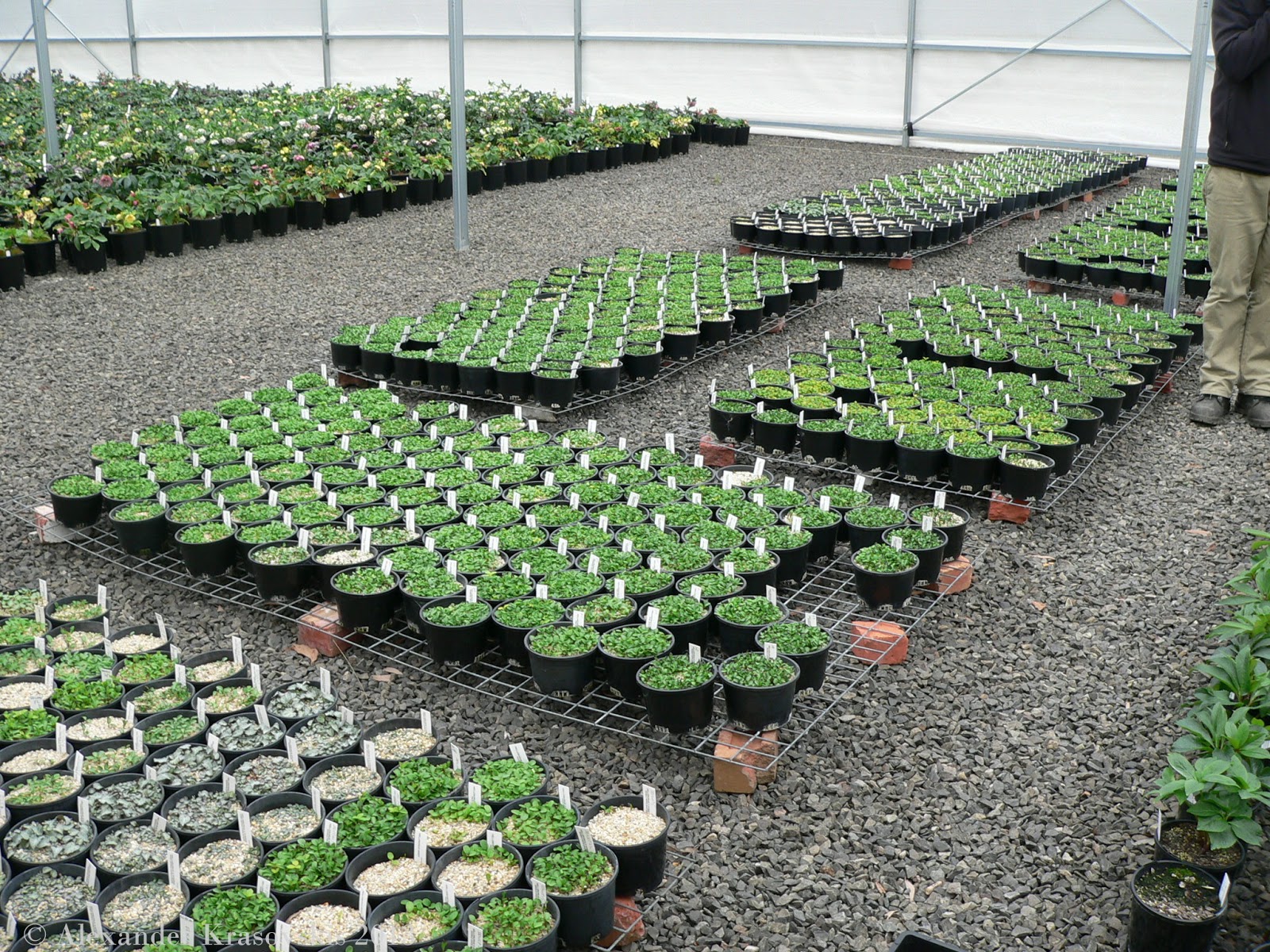
Below are the pots which contain sown seed from the hybrid plants. They looked to be growing in a very rocky growing medium. From here they are pricked out by hand and transplanted into tubes.


The plants pictured below are Peter Leigh's collection of Hellebore sp. plants he has grown from seed sent from overseas. Some are used to create hybrids for sale. Others are just collection plants.


This is where the magic happens. It is the shade house where the stock plants are hand pollinated to create hybrid seed which grow into the plants they sell. What you see below is only an eighth of the total amount of stock plants that were in this area. 


These last shots are of several of the flowers on the stock plants. I could have photographed all day as there were so many plants. 


Friday, July 19, 2013

Winter flowering plants in Parkville

It's a common misconception that plants do not flower in winter. In Melbourne this is definitely not the case and I am a great believer in winter flowering plants they provide attractive colour  in the garden when the deciduous trees have lost their leaves. Although we are now approaching the middle of winter there are lots of beautiful plants in bloom at my work. Strangely the weather has been unseasonably warm lately with several days approaching 20 Celsius after frosty mornings. The warmer temperature makes gardening a lot more comfortably and to be honest I haven't hated the frosty mornings because, in Parkville, I have had lots of physical morning tasks that keep me warm. Of all the winter flowering plants my favorite has to be the Magnolia trees. There is one large specimen in Parkville that, so far, has not lost its buds to hungry possums. Last year it only had a handful of flowers due to bud loss but its looks as though it will fully flower this year.


Magnolia soulangiana. This could be my favorite tree and the flowers are just starting to pop.


The same tree as above. You can see how many flowers have already opened. This time last year we only had about half of what is shown here across the whole tree. Notice the sunny blue winter sky.


Hellebores are also starting to open. We have several different types in the Parkville garden.


Another Hellebore. Not sure of the variety but I'm fairly sure we sourced them from 'post office farm nursery' which is a grower up in Woodend near my home. They have open days on Sundays this time of the year. A link to their website is below.


The annual bed is loaded with new plants. I planted Kale, Violas, Pansies, Cinerarias and Stocks. I also cannot bring myself to remove that small bunch of violets that have self seeded in the front of the bed. In a mont or so this bed should look fantastic.


I discovered this plant in flower whilst pruning some nearby Wisteria. It is called Luculia and its perfume smells amazing. 


The good old Salvia plant keeps flowering year round not just in winter.


Several bulbs have popped up out of the ground and this Jonquil seems to have beaten them all and flowering first.


Below is a Strelitzia or 'bird of paradise'. These plants are a common sight in many Melbourne gardens. They are tough plants which do not need much water.


Another one of my favs is the Kniphofia plant pictured below. The ones I propagated and planted at home have still not flowered but the ones in Parkville are in full bloom.


Sunday, September 2, 2012

Hellebores at Mt Macedon rare plants nursery

Yesterday I worked up at Dicksonia Rare Plants nursery in Mt Macedon. I haven't worked up there for a couple of weeks due to there being incredibly heavy rain. Its been quite uncomfortable working up on the mountain during the winter. Some days it's been between 3 and 5 degrees Celsius and when you take the wind chill factor into account it makes for a bloody cold day. Yesterday was the first day of spring and also the first day in a while where the weather has been sunny and warm. It made for a nice change.

From the nursery I've photographed these Hellebores. Almost everyone who enters stops to look at them. They are hybrids the first of which is called Helleborus x ballardiae 'pink frost'. I'm not sure of the name of the second but you can see that it is a double Hellebore of some variety. These plants have survived the cold winter up at Mt Macedon so they can obviously tolerate frost. Hellebores can also tolerate some shade and they like to be planted under deciduous trees.