As part of my studies I have recently starting testing different commercially available potting mixes. Although the test I have performed isn't strictly scientific it should give a good indication of the effectiveness of different brands. I chose curly leaf parsley as the plant to grow and planted it out in 100mm black plastic pots. The pots are all placed in the same area in the outside growing area of Fairfield TAFE. I have also used 3 different types of fertilizer (Nutricote Exotic, Osmocote Exotic & Green Jacket Exotic) in conjunction with a control (no fertilizer). The prices of the different potting mixes vary considerably and many seem to contain the same ingredients. Some of the mixes display the logo which indicates compliance with the AS3743 Australian standard and others do not. Strangely the most expensive potting mix does not have the AS3743 logo on it and I think that may have something to do with the fact that it is an 'organic' mix. I'm guessing this has something to do with the natural variance of organic materials. I planted out the parsley into all mixes and also fertilized each mix
with the three different fertilizers mentioned above. On planting the
seedlings were all healthy and were roughly 45mm tall. I will post the
end results once the trial is over.
THE CONTENDERS;
1. Hortico all purpose blend
Price: $6.30c
Description on packet: For a wide variety of indoor and outdoor plants. Composted pine bark. AS3743 compliant. Contains minerals and fertilizer. Living organisms
2. Osmocote multi purpose
Price: $7.98c
Description on packet: 4 months osmocote. AS3743 compliant. Wetting agent, composted pine bark, living organisms. For a wide variety of plants.
3. Osmocote premium
Price: $10.97c
Description on packet: 6 months osmocote. AS3743 compliant. Composted pine bark, water crystals, coir, wetting agent, living organisms. For a wide variety of plants
4. Miracle gro multi purpose
Price: $6.97c
Description on packet: Controlled release fertilizer. AS3743 compliant. Composted pine bark, wetting agent, living organisms. For a wide variety of plants.
5. Debco potmate
Price: $10.47c
Description on packet: Controlled release fertilizer. AS3743 compliant. Composted pine bark, living organisms, wetting agent. For a wide variety of plants.
6. Debco organic
Price: $13.98
Description on packet: Superior composted pine bark, premium blood and bone, organic carbon, NASAA input for organic production, no household green waste, ph balanced. For a wide variety of plants. No AS3743 compliance logo.
7. Rich gro all purpose
Price: $3.78c
Description on packet: Composted pine bark, living organisms, mineral fertilizer. For pots and all plant types. No AS3743 compliance logo.
8. Miracle gro organic choice
Price: $9.42c
Description on packet: Composted pine bark, blood and bone, fish meal, seaweed, chicken manure, feather meal, bio stimulants, living organisms, feeds for 3 months. No AS3743 compliance logo.
9. Osmocote plus organics
Price: $11.98c
Description on packet: Composted pine bark, AS3743 compliant, composted manure, blood and bone, seaweed, fish meal, gypsum, wetting agent.
10. NMIT Debco pro
Price: ???
Description: This is the potting mix that NMIT TAFE buys directly from Debco by the cubic metre. I don't know much about what is in it and can only guess as the the ingredients from visual inspection. It looked to contain no control release fertilizer or water crystals. Like all the others it is made from composted pine bark.
An Australian horticultural blog about plants and gardens. You can contact me at alex.krasmo@gmail.com
Wednesday, August 14, 2013
Saturday, August 10, 2013
Revisiting the Titan Arum (Corpse Flower) in the Royal Botanic Gardens Melbourne
Last year just before Christmas I visited the Botanical Gardens in Melbourne in an attempt to see the flower of the Amorphophallus titanum plant (see my blog entry http://aggregata.blogspot.com.au/2012/12/visit-to-see-corpse-flower-aka-titan.html). Unfortunately I was 2 days too early and it hadn't opened yet. I left for holidays a day after I visited the plant and it opened when I was away. I was quite disappointed as I really wanted to experience the 'perfume' of the Titan arum's flower which is supposed to smell like rotting flesh (which is where it gets its other common name 'corpse flower' from). Anyway I revisited the tropical greenhouse at the Botanical Gardens and saw the amazing leaf which is what grows after the flower dies back. Although it looks like an actual tree the plant you see in the picture below is actually one single leaf. I'm pretty sure this is called a compound leaf but it could be called a phyllode which is a modified leaf structure, I'm not quite sure. Apparently the leaf dies back each year and is replaced by a new one which grows from the plants corm. Seeing the huge leaf almost made up for the fact that I missed the plant in bloom. Titan arums are quite rare plants and until recently they had only been propagated in small numbers. The gardens have others that are being grown so hopefully in the future I will be able to experience one in flower.
Front and centre is the massive single leaf structure of the Amorphophallus titanum plant. The individual 'leaves' you see are actually called leaflets. Another 50cms of growth and it will be too tall for the greenhouse.
Thought I would include these two pictures of some orchids that were in the greenhouse also. Everyone loves orchids and there were heaps in flower inside the greenhouse.
Tuesday, August 6, 2013
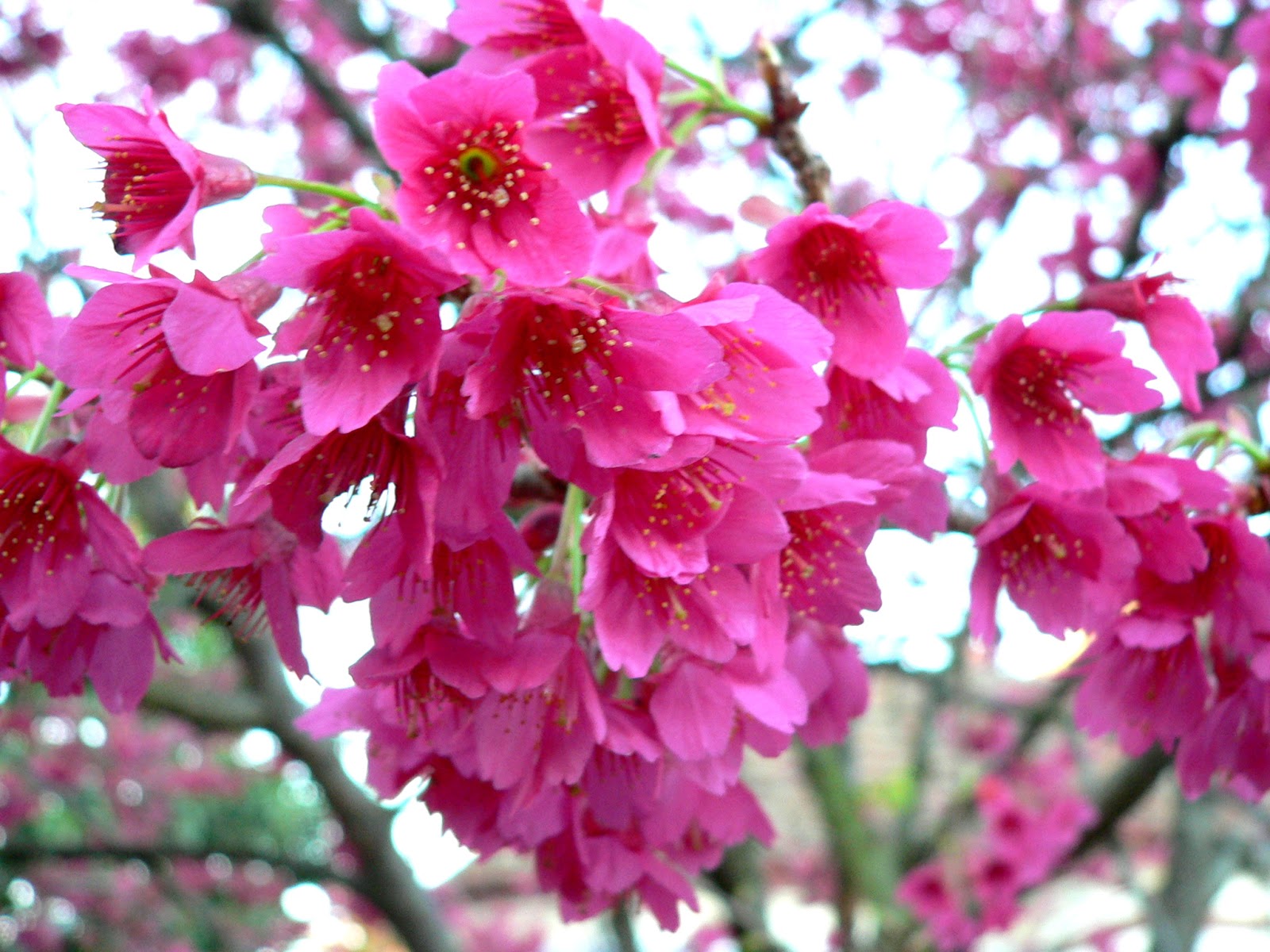
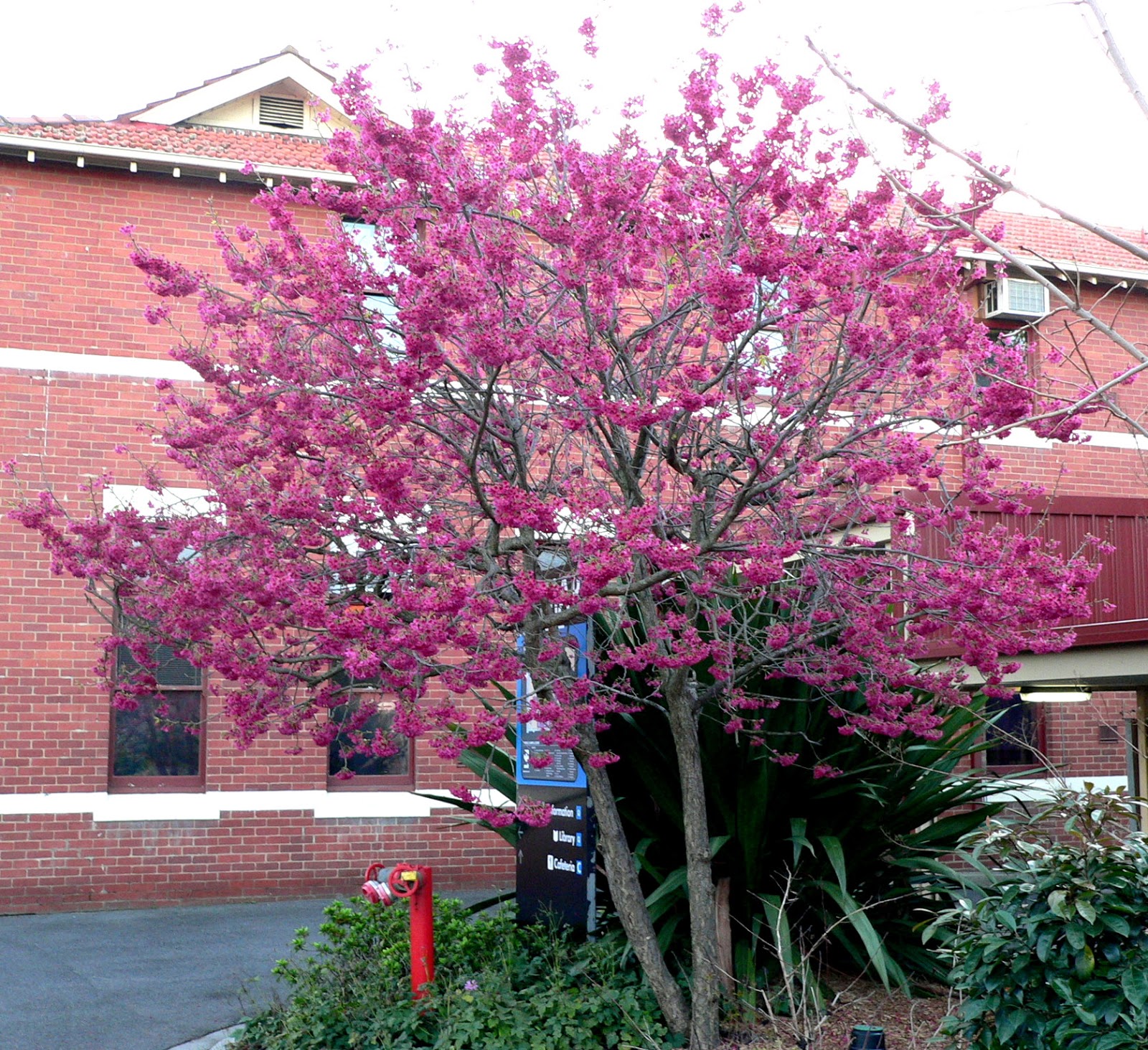
Winter flowering tree Taiwan Cherry (Prunus campanulata)
Prunus campanulata flowers in bloom
The tree in it's entirety and in full bloom.
Close up of the flowers.
Thursday, August 1, 2013
The Royal Botanic Gardens in Melbourne Australia are under attack!
I visited the Royal Botanic Gardens Melbourne a couple of days ago and saw, amongst other things, damage that has been inflicted on trees and cacti by vandals. Probably the saddest sight was the Separation Tree which is a heritage tree that existed before Europeans colonized Australia.
The Separation Tree is named so because it is where citizens gathered to celebrate state of Victoria separating from the state of New South Wales in 1850. It also holds cultural significance for people indigenous to the area. It is a river redgum and is over 400 years old. The tree was ring barked back in 2010 and had survived by a technique called 'bridge grafting' where redgum sapling bark is grafted across the damaged area, thereby bridging the ring barking allowing energy photosynthesized by the leaves in the canopy to reach the tree's roots. Without the bridge grafts energy cannot be sent to the trees roots and they die. The dead roots cannot send water and nutrients up to the canopy and the canopy then dies. Needless to say it angers me and others to see it attacked once more as even with the bridge grafts the tree was still struggling to stay alive.
The most recent attack was on the 21st of July and amazingly it followed another attack which was on the area in the gardens known as 'Guilfoyle's Volcano' on July the 5th. Guilfoyles volcano is an area planted out with succulents and cacti. When I visited it the damaged plants were nearly all replaced but it didn't look quite as grand as many of the plants were smaller than the originals. Below is a link to a news report showing some of the scale of the damage to the cacti and succulents. In that attack most of the large plants in the succulent garden were damaged.
http://www.abc.net.au/news/2013-06-05/vandals-destroy-rare-cacti-in-royal-botanic-gardens/4735616
The attacks have prompted calls for better security to be installed to protect the gardens. The gardens CEO however, has stated ''In the end though, the gardens can not, and should not, be a high-security compound" and also ''We seem to have a problem with a small number of individuals who have no regard for the importance of these trees and the significance of the gardens". If more attacks occur I personally think that tighter security is necessary and should be used.
The Separation Tree as I saw it on my visit. The hessian covers sphagnum moss in an effort to assist healing. I'm guessing that the moss is only a temporary measure and that bridge grafting will again take place.
Another victim, this time a spotted gum.
Sign of the times.
Attempted ring barking. I wonder whether they were disturbed and ran or if they just got tired and stopped?
This is the succulent garden that surrounds a water reservoir called 'Guilfoyle's Volcano' (not a real volcano of course).
The succulent garden was looking leaner than usual but impressive nonetheless.
More evidence of vandalism.
'Guilfoyles Volcano' was built in 1876 to store water for the gardens. For 60 years it was left idle but has now been restored. William Guilfoyle become the second director of the Royal Botanic Gardens in Melbourne in 1873 succeeding Ferdinand Von Mueller. He radically changed the gardens and made them more ornamental and scenic as opposed to Von Mueller's vision which was more of a systems garden. Below are pictures of the top of the volcano.
Labels:
Australia,
Cacti,
Ferdinand Von Mueller,
Guilfoyle's volcano,
Melbourne,
Royal Botanic Gardens Melbourne,
Separation Tree,
succulents,
Vandalism,
Water features,
William Guilfoyle
Location:
Melbourne VIC, Australia
Sunday, July 28, 2013
Visit to Post Office Farm Nursery, Hellebore growers and hybridizers.
Earlier today I braved the cold Macedon Ranges winter environment to visit Post Office Farm Nursery which is a Hellebore grower and hybridizer located outside Woodend not far from my home. In my opinion Post Office Farm produces the best Hellebore hybrids in Australia and being a wholesale supplier the nursery is only open to the public during certain times of the year. It was great to see what this sort of production environment looked like on the inside and it was surprisingly not as mechanized as I thought it may have been. All processed apart from watering looked to be done by hand in contrast to the plug growers I have heard about which have robotics most of the duties. The selection of hellebores on offer was amazing and I strongly suggest you visit yourself if you have the inclination to do so (links to the website are below). If you like the Hellebores they produce you can also find their hellebores labelled as 'Winter Elegance'. In retail nurseries. I will write a blog entry with more info about hellebores and also growing / care instructions in the near future.
Links
Post Office Farm Nursery
http://www.postofficefarmnursery.com.au/
Winter Elegance range of hellebores
http://www.helleborus.com.au/series.html
Links
Post Office Farm Nursery
http://www.postofficefarmnursery.com.au/
Winter Elegance range of hellebores
http://www.helleborus.com.au/series.html
Peter Leigh (owner and manager of Post Office Farm) giving a talk about hybridizing. He gives tours on Sundays and provides lots of information about growing and caring for these sensitive plants. Notice the black coloured Hellebores at his feet.
So many plants. I think these ones were about 12 months old.
More advanced plants. The price is significantly higher for a more established plant such as these.
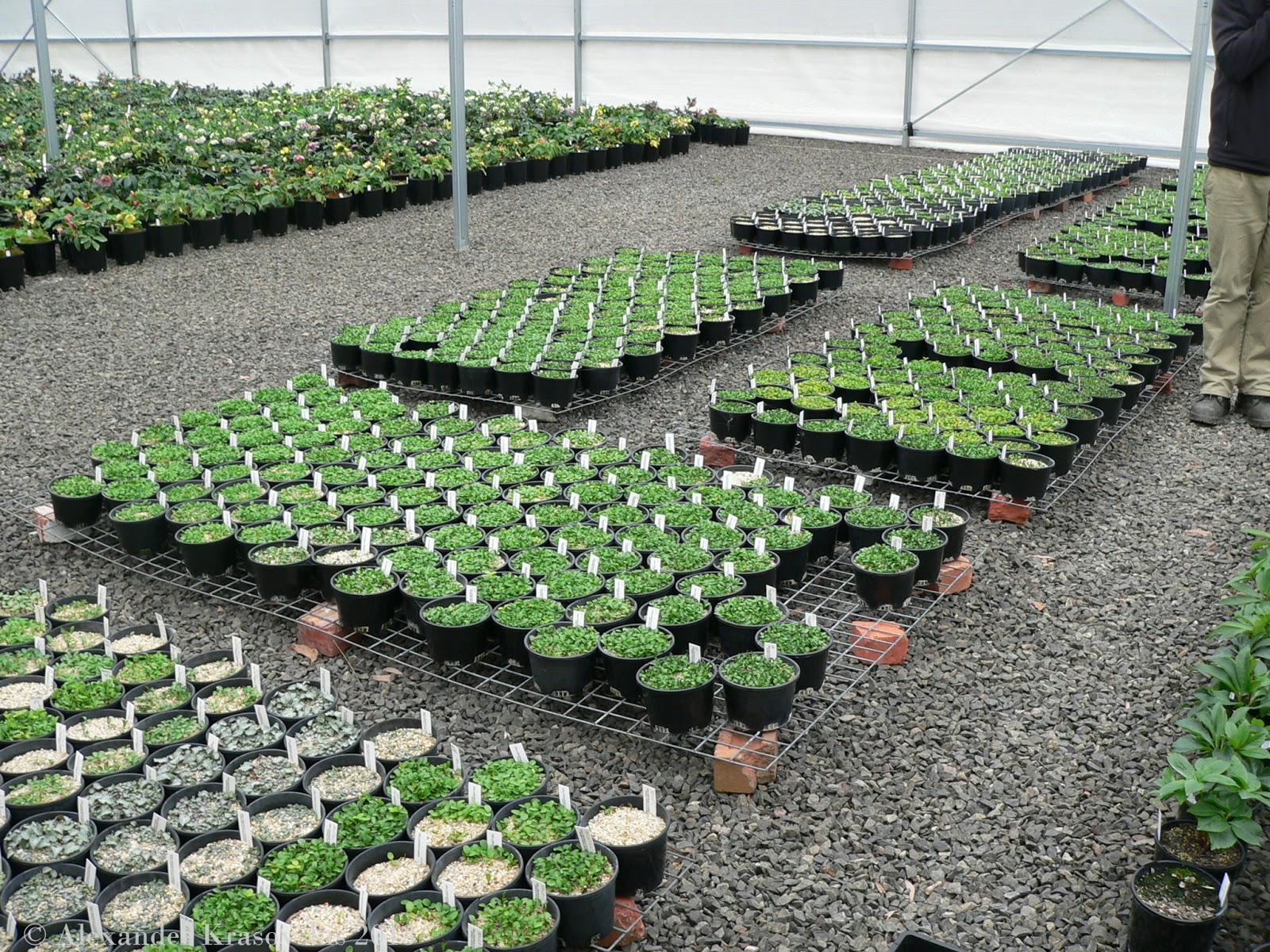
Below are the pots which contain sown seed from the hybrid plants. They looked to be growing in a very rocky growing medium. From here they are pricked out by hand and transplanted into tubes.
The plants pictured below are Peter Leigh's collection of Hellebore sp. plants he has grown from seed sent from overseas. Some are used to create hybrids for sale. Others are just collection plants.
This is where the magic happens. It is the shade house where the stock plants are hand pollinated to create hybrid seed which grow into the plants they sell. What you see below is only an eighth of the total amount of stock plants that were in this area.
These last shots are of several of the flowers on the stock plants. I could have photographed all day as there were so many plants.
Friday, July 19, 2013
Winter flowering plants in Parkville
Magnolia soulangiana. This could be my favorite tree and the flowers are just starting to pop.
The same tree as above. You can see how many flowers have already opened. This time last year we only had about half of what is shown here across the whole tree. Notice the sunny blue winter sky.
Hellebores are also starting to open. We have several different types in the Parkville garden.
Another Hellebore. Not sure of the variety but I'm fairly sure we sourced them from 'post office farm nursery' which is a grower up in Woodend near my home. They have open days on Sundays this time of the year. A link to their website is below.
The annual bed is loaded with new plants. I planted Kale, Violas, Pansies, Cinerarias and Stocks. I also cannot bring myself to remove that small bunch of violets that have self seeded in the front of the bed. In a mont or so this bed should look fantastic.
I discovered this plant in flower whilst pruning some nearby Wisteria. It is called Luculia and its perfume smells amazing.
The good old Salvia plant keeps flowering year round not just in winter.
Several bulbs have popped up out of the ground and this Jonquil seems to have beaten them all and flowering first.
Below is a Strelitzia or 'bird of paradise'. These plants are a common sight in many Melbourne gardens. They are tough plants which do not need much water.
Another one of my favs is the Kniphofia plant pictured below. The ones I propagated and planted at home have still not flowered but the ones in Parkville are in full bloom.
Labels:
annuals,
Australia,
Hellebore,
Jonquil,
Kniphofia,
Luculia,
Magnolia,
Magnolia Soulangeana,
Melbourne,
Pansy,
Parkville,
Salvia,
Strelitzia,
Violas,
Winter flowering plant,
Winter garden
Location:
Parkville VIC, Australia
Friday, July 5, 2013
1st attempt at pruning my apple tree (spur pruning)
Last year I was set the assignment of writing an assignment on pruning apple trees. I wrote it and handed it in and since then I have been waiting for winter to prune my own apple tree at home. Pruning apple trees is not something I've had any experience in so I'm hoping that the tree will respond in a positive way. Other tasks I have left to complete are feeding the tree (which I will do once it breaks out of dormancy) and netting it to keep the birds away from the fruit. If I can manage to complete those last two tasks I should have lots of apples come summer. Listed below are pruning instructions from my pruning assignment and also some before and after pictures of my tree.
SPUR PRUNING INSTRUCTIONS
Winter pruning;
The main pruning is done during winter when the tree is dormant. Tasks for winter pruning include;
- Removing branches that do not conform to the shape of the tree (ill directed branches pointing inwards rather that outwards are an example)
- Removing week spindly branches to allow more energy to be concentrated on the strong branches
- Removing dead or diseased wood which may promote or harbour certain pests or diseases
- Thinning crowded growth to improve ventilation and light penetration through to lower branches.
- Shortening back last seasons growth by two thirds to encourage spurs to form and to keep these close to the main branch.
Summer pruning;
Summer pruning can also be performed which involves
- Picking out water shoots to allow energy to be directed to more established fruiting spurs
- Pinching the growth tips of over vigorous lateral branches to concentrate the trees energy to the fruiting spurs
Spur pruning a lateral branch;
This is done on an established tree where formative pruning is already complete. The purpose of spur pruning is to enhance the fruit production yield rate by concentrating the trees energy on its fruiting buds rather than letting it grow longer branches. Done correctly it should increase the amount of fruit and the size of the fruit.
The way to do this pruning is to shorten the lateral shoots to three or four buds for shoot. Also the main leader of the branch should be shortened to half of the growth produced during the previous year. As always try to prune to an outwards facing bud to maintain an attractive and functional shape. Below is a drawing showing how you would prune a spur-bearing fruit tree branch.
Below is my illustration of spur pruning
The apple tree prior and post pruning. Notice all those upright twigs at the top of the tree. I think they are what they call water shoots.
Subscribe to:
Posts (Atom)