Showing posts with label Australia. Show all posts

Tuesday, May 1, 2018

How I've improved the soil in my backyard veggie beds

First of all I realize it has been a while between posts (I'm not dead in case you were wondering)

When I opened up my blog a few days ago I was shocked to see the last post was in 2016! Basically I got a bit blogged out and forgot / ignored it. I'm pretty sure that I've lost all the people who used to follow my blog and that is my fault but hopefully I can get things rolling again and put down some content regularly from here on. If you're an old follower who is reading this because of some kind of alert then please come back again. Anyway I'm alive and well plus I'm going to be starting my own garden design / maintenance business very soon now which is personally very exciting (see www.aggregata.com.au for a partially finished website).

Improving the soil in my backyard veggie patch

History of the site

We purchased our land in Macedon Victoria around 10 years ago and after a while I noticed a few strange things about the soil. The block we live on was one of the most barren in the street. Unlike the other blocks which had lots of trees and plants ours was rather bare with large patches of mixed species (weedy) lawn. Through digging in the backyard I found very little top soil compared to the front which had at least 15cm and more in some places. I'm wondering whether the top soil in the back yard was scalped by a bob cat at some stage.

Soil analysis

I learnt how to complete a basic soil analysis through one of my subjects at university and I discovered the following info about the soil in the backyard;

  • It had a PH level of 5 which is slightly acidic and possibly detrimental to plant growth for some species
  • Using the soil texture triangle I was surprised to find the soil was in fact classified as sandy clay loam (56.52% sand, 30.43% clay and 13.04% silt)

Ah Manutec my old friend. You are so much more accurate and reliable than the $5 Bunnings PH probe.


Is it 5.5 or 5? Hard to tell from the pic but it looked more like 5.


Soil improvement last year

I dug the beds last year in preparation for spring planting. I sprayed off the turf with organic herbicide and dug in some compost. Unfortunately I didn't attempt to rectify the PH. Plant growth was not great last season.


Bed #1 with last spring / summers pathetic left overs.


Bed #2 which I cleared out a few weeks back.


My raised bed. You can see the difference. So much growth. On a side note organic snail bait doesn't work. I caught the little buggers munching on my bok choy it a few nights ago. I'll have to try other methods as I don't really want to go back to using Baysol snail pellets.


Overhaul

After pulling the old veggies out I dug in roughly half a m2 of five ways soil mix then limed the
Although last years crop wasn't very good I was pleased to see the soil had improved structure wise. It felt nice and loose when digging it over and it had a nice amount of moisture. The soil definitely was less hard packed. I applied lime at the rate of 100g per m2 to try and change the PH back to a more neutral level. I'll do another PH test soon to see if it worked. I then watered the lime in and mulched over with old straw from my chicken coop that I removed a few weeks back. The plan for the beds are to plant out 1kg of garlic that is arriving in the mail soon.


There's nothing like the feeling (and smell) of driving a ute with one m2 of 5 ways mix on the back.


Look at that pristine bed all ready to go and not a weed in site. It won't stay that way for long :)


I always water down mulch. Don't know if it really helps it settle and become wind resistant but that's the idea.


Saturday, April 30, 2016

Burnley late season produce plot still kicking

What's happening at Burnley?


Over the last few weeks my plot at university has been putting on some massive growth. I seem to have been gifted some fantastic weather as it has been quite warm for this time of year and we have had a few decent downfalls of rain (not that it matters so much because I have drip irrigation going). Weeding been kept minimal due to the heavy mulch covering the plot. The effectiveness of the mulch is evident from the carpet of weeds that surrounds the plot which is almost at the point of being classified as some form of turf due to its increasing density.

Harvest from the plot has included several mammoth zucchinis, lots of cos lettuce, some chard and finally a ripe grosse lisse tomato! Yes some of my tomatoes are now starting to blush red. None of the bush tomatoes have ripened but some from the other plots are nice and red. I tasted one from an abandoned plot and it was really floury but I suppose you can't expect great fruit this time of year. The grosse lisse tomato from my plot was a little better but still a bit on the dry side.

Little baby beans are starting to appear bringing hope of a mini bean harvest and the New Zealand yams are also starting to form now that the autumn equinox has occurred. Last week I checked my broccoli and small florets are there amongst the leaves and my snow peas continue their ascent up the bamboo tripod.

Small eggs are present under the broccoli leaves and i'm guessing they are probably cabbage moth larvae. Looks like I took too long to net the broccoli. Other than that no major pest and disease problems are apparent. More to come.


I was starting to think it wouldn't happen then one finally ripened on the vine.


The contrast in my two rows of carrots is obvious. The carrot seed was mixed with sand to aid dispersal but I think I needed to shake the vial more thoroughly as all the seeds ended up in one row and few in the other. I sowed some more in the thin row to try and compensate.


My broccoli plants have outgrown their netting.


Mammoth zucchini and regular zucchini on my backpack for scale.


Zucchini flowers are spectacular.


 My broccoli freed from its netting


Under-storey action beneath the chard and broccoli.


More mammoths


Baby beans forming at last.


Another harvest zucchini and my first chard. The cos is getting a bit big now, this one was the size of my head which may explain why they call it a 'head of lettuce'.


Wednesday, April 6, 2016

Burnley produce plot. Harvesting lettuce cos the time is right.

Melbourne University plot mini harvest

The last blog post I wrote about my Burnley produce plot related to it as it stood back on the 9th of March (approximately one month prior to this post). Back then all the seeds and seedlings had been planted out, the plot had been mulched and fertilised and drip irrigation was installed. Now in less than one months time I am starting to harvest some food.


The plot on the 9th of March


The plot on the 6th of April


It's amazing how productive the plot has been considering the minimal amount of work I have put into it. During the last month I have probably only done a total of 30 minutes of weeding thanks the thick layer of mulch I have employed. Other tasks have included netting the brassicas to protect them from cabbage white butterfly, threading some twine around my tripod to aid the peas in their ascent up the bamboo and pruning my indeterminate (vine) tomato plant. Pruning the vine tomato is actually something which at home I had attempted and failed. Essentially I think I failed because of the myriad of conflicting and confusing youtube videos I had watched on the subject. Due to that negative experience I gave up and grew only bush varieties (which necessarily require pruning). I think next spring I might give some vine varieties a go and write up my own guide on the subject. Today was the first harvest from the plot and I took home some zucchini and two heads of cos lettuce. All the other plants look to be doing fine. Next update coming soon.


From left to right: tomato, zucchini, beans, lettuce, NZ yams and carrots


My modified pea tripod (inspired by the Melbourne art centre spire) 


The vine tomatoes are looking healthy but will they actually ripen this late in the season?


Two cos lettuce (miraculously untouched by snail or slug) and a mega zucchini from the plot.


Sunday, April 3, 2016

Melbourne International Flower & Garden Show 2016 garden designs

MIFGS 2016 

Recently in Melbourne the annual flower and garden show was in full swing in the Carlton gardens and as usual I paid a visit with camera in hand to try and capture some of the amazing designs on display. As usual everything was of high standard with a few of the designs really impressing me. Aside from the garden designs the garden sculpture/art section of the show was also impressive with more timber being used in the pieces submitted. I've covered the show several times before in my blog and this time rather than waffle on about this and that I've decided to jump right in with the pictures which I'm guessing is what everyone really want to see.


Ian Barker garden design

A regular at the show Ian Barker and his team put together this wonderful display which made use of an existing pond in the Carlton Gardens. To my eye the design appeared to be a mixture between sharp / formal lines broken up by the use of herbaceous perennials and a gravel path. Obviously it also incorporated a small boat ramp. Polygonum, Helenium, Salvia, Geum, Verbascum and Panicum were some of many species used.


'The Greenery Garden' by the Greenery Garden Centre. Gold Medal Winner

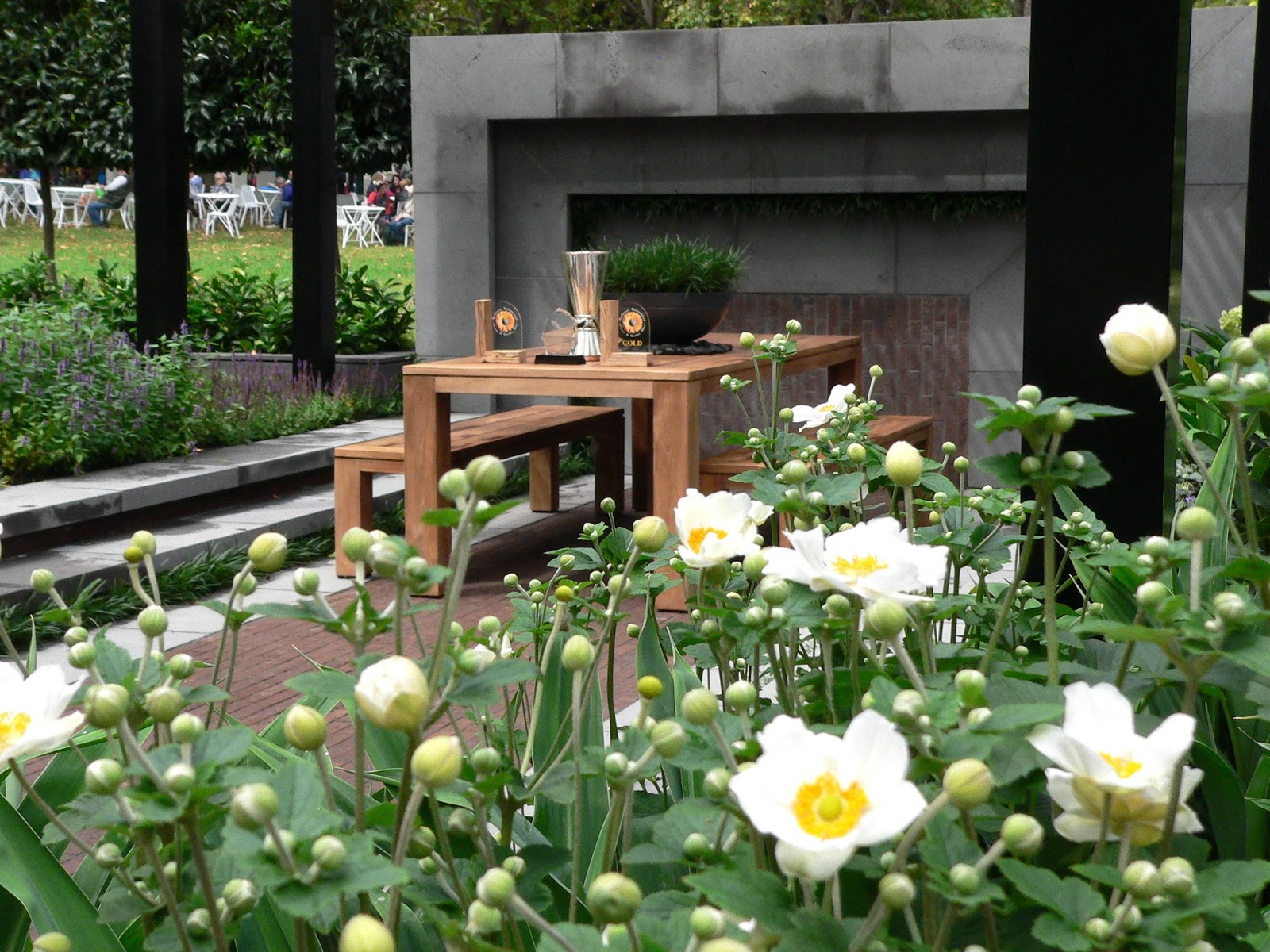
The Greenery Garden Centre is an establishment in Melbourne's northern suburbs famous for its large range of high quality plants. It isn't the cheapest nursery in Melbourne but the stock is always of good quality. What there design name lacked in terms of creativity was certainly made up for in terms of plant layout and selection. The hard architectural elements of the design were also fantastic with several sections visually separated from each other. This made the design somehow seem larger than it was in its entirety. The shiny dark green foliage of the background plantings highlighted the light coloured flowers in the display. They used time proven classics such as Hydrangeas, Cistus, English box and Magnolia 'little gem'.


'Absendere' by Landscabe Labs. Bronze medal winner

This minimalist design won the bronze. Not really my cup of tea but obviously the judges thought otherwise. It seemed to incorporate more turf and architecture than it did bedding plants and trees. In the beds I think I saw some Sedum, Lomandra and maybe some young Proteas.


GHLD & The Garden Co. Silver medal winner.


This rather tropical looking design was good enough for a silver. One of its main tactics was the usage of large foliage. Ancient Cycads, palms, Agaves, Cannas, Strelitzias and Fragipanis were all used.  The surfer girl in the water feature was a focal point but I'm not sure if many people would appreciate that in their home garden.


BLAC Design and Contruction. Gold medal winner


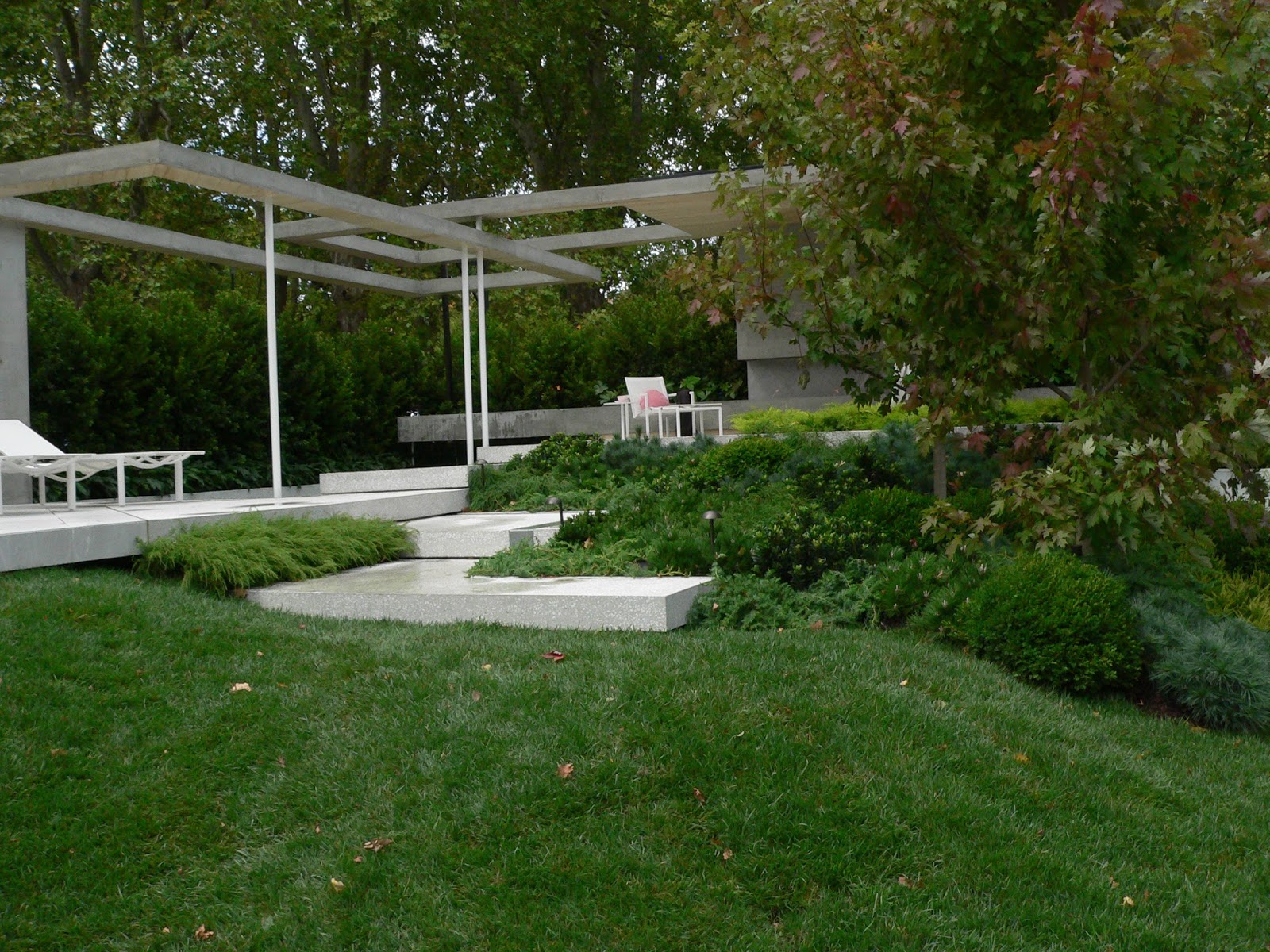
This very subtle design took out a gold medal. It was a bit an out of the box type of design with not a flower in sight. It was basically a mixture of different green foliage with a few grey / blue plants and some really light almost lime green plants in there to help keep things interesting. I can't really tell from my pictures but lots of the plants in the bed look to be prostrate gymnosperms or conifers to the layperson. There also appears to be several grass plants in there too.


The Aggregata Plants & Gardens blog personal choice award goes to................

'The Retreat' by Paul Hervey-Brookes

Not all the plants used in this design were Australian natives but 'The Retreat' unmistakeably had an Australian aura. This design showcased what I would describe as a wilderness garden come colonial settlers cottage style of garden. It used several Eucalypts for the tall plants and had several beds which bordered a meandering path of granetic sand and river pebbles. Westringia, Anigozanthos, Limonium, Correa and Salvia (I think) were used in the beds. The colour of the sand and the river pebbles seemed to simulate a dry river bed you might find somewhere where the soil has a tinge of redness to it (like parts of the snowy mountains). This splendour was all complimented by a traditional rusty gate.


Garden art and sculpture

I have recently been doing some work for a company called 'Neo Rustic' which sells different Australian  and exotic hardwoods and makes benches, tables and furniture from timber. Maybe that is why I seemed to notice an increase in the amount of timber used in the garden sculpture at MIFGS. I really love the use of timber in garden sculpture as I think it has a much more organic appearance compared to straight stone or metal pieces. Lots of the timber seemed to be Tasmanian in origin (eg Huon Pine).