Wednesday, April 6, 2016

Burnley produce plot. Harvesting lettuce cos the time is right.

Melbourne University plot mini harvest

The last blog post I wrote about my Burnley produce plot related to it as it stood back on the 9th of March (approximately one month prior to this post). Back then all the seeds and seedlings had been planted out, the plot had been mulched and fertilised and drip irrigation was installed. Now in less than one months time I am starting to harvest some food.


The plot on the 9th of March


The plot on the 6th of April


It's amazing how productive the plot has been considering the minimal amount of work I have put into it. During the last month I have probably only done a total of 30 minutes of weeding thanks the thick layer of mulch I have employed. Other tasks have included netting the brassicas to protect them from cabbage white butterfly, threading some twine around my tripod to aid the peas in their ascent up the bamboo and pruning my indeterminate (vine) tomato plant. Pruning the vine tomato is actually something which at home I had attempted and failed. Essentially I think I failed because of the myriad of conflicting and confusing youtube videos I had watched on the subject. Due to that negative experience I gave up and grew only bush varieties (which necessarily require pruning). I think next spring I might give some vine varieties a go and write up my own guide on the subject. Today was the first harvest from the plot and I took home some zucchini and two heads of cos lettuce. All the other plants look to be doing fine. Next update coming soon.


From left to right: tomato, zucchini, beans, lettuce, NZ yams and carrots


My modified pea tripod (inspired by the Melbourne art centre spire) 


The vine tomatoes are looking healthy but will they actually ripen this late in the season?


Two cos lettuce (miraculously untouched by snail or slug) and a mega zucchini from the plot.


Sunday, April 3, 2016

Melbourne International Flower & Garden Show 2016 garden designs

MIFGS 2016 

Recently in Melbourne the annual flower and garden show was in full swing in the Carlton gardens and as usual I paid a visit with camera in hand to try and capture some of the amazing designs on display. As usual everything was of high standard with a few of the designs really impressing me. Aside from the garden designs the garden sculpture/art section of the show was also impressive with more timber being used in the pieces submitted. I've covered the show several times before in my blog and this time rather than waffle on about this and that I've decided to jump right in with the pictures which I'm guessing is what everyone really want to see.


Ian Barker garden design

A regular at the show Ian Barker and his team put together this wonderful display which made use of an existing pond in the Carlton Gardens. To my eye the design appeared to be a mixture between sharp / formal lines broken up by the use of herbaceous perennials and a gravel path. Obviously it also incorporated a small boat ramp. Polygonum, Helenium, Salvia, Geum, Verbascum and Panicum were some of many species used.


'The Greenery Garden' by the Greenery Garden Centre. Gold Medal Winner

The Greenery Garden Centre is an establishment in Melbourne's northern suburbs famous for its large range of high quality plants. It isn't the cheapest nursery in Melbourne but the stock is always of good quality. What there design name lacked in terms of creativity was certainly made up for in terms of plant layout and selection. The hard architectural elements of the design were also fantastic with several sections visually separated from each other. This made the design somehow seem larger than it was in its entirety. The shiny dark green foliage of the background plantings highlighted the light coloured flowers in the display. They used time proven classics such as Hydrangeas, Cistus, English box and Magnolia 'little gem'.


'Absendere' by Landscabe Labs. Bronze medal winner

This minimalist design won the bronze. Not really my cup of tea but obviously the judges thought otherwise. It seemed to incorporate more turf and architecture than it did bedding plants and trees. In the beds I think I saw some Sedum, Lomandra and maybe some young Proteas.


GHLD & The Garden Co. Silver medal winner.


This rather tropical looking design was good enough for a silver. One of its main tactics was the usage of large foliage. Ancient Cycads, palms, Agaves, Cannas, Strelitzias and Fragipanis were all used.  The surfer girl in the water feature was a focal point but I'm not sure if many people would appreciate that in their home garden.


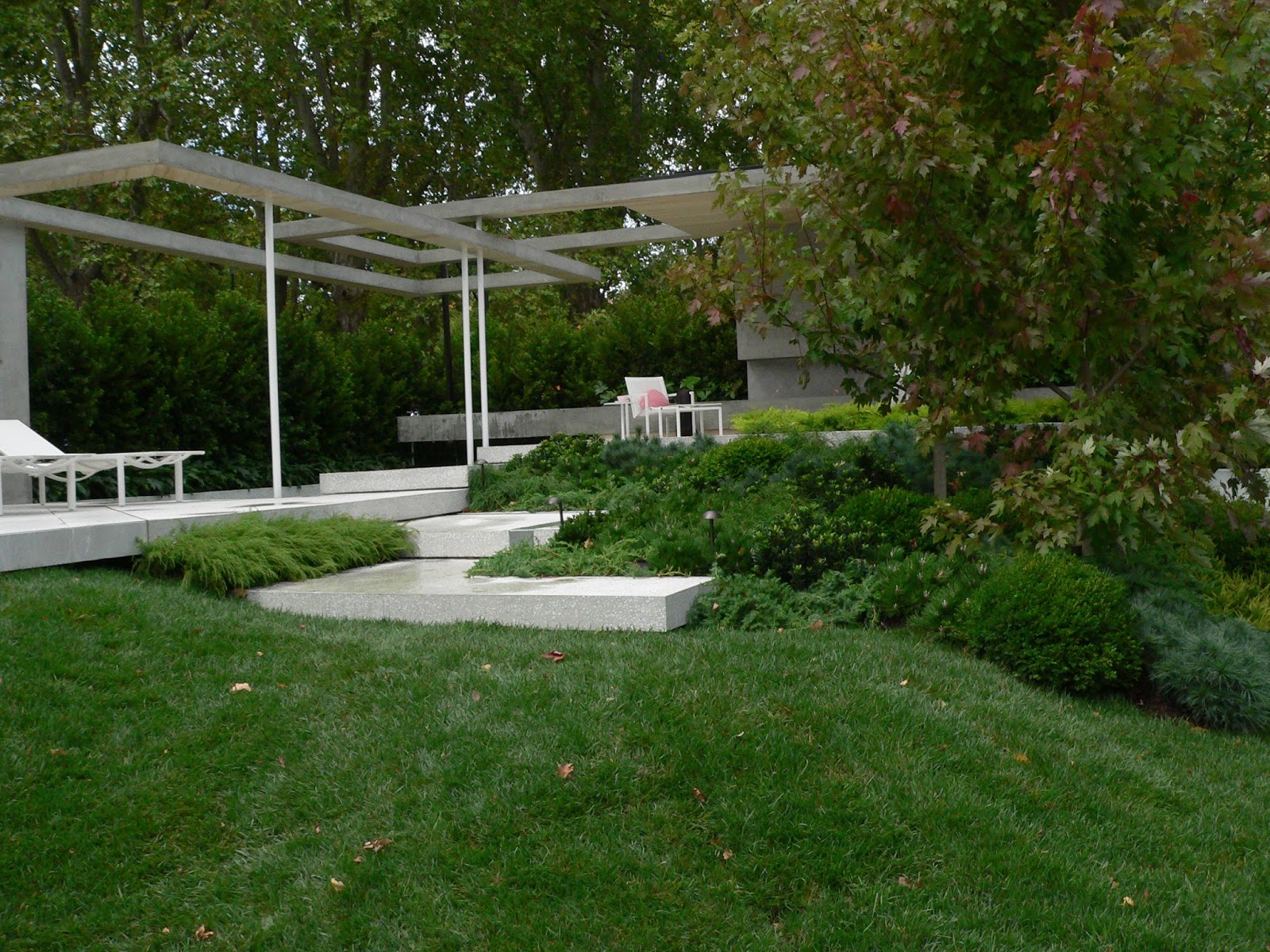
BLAC Design and Contruction. Gold medal winner


This very subtle design took out a gold medal. It was a bit an out of the box type of design with not a flower in sight. It was basically a mixture of different green foliage with a few grey / blue plants and some really light almost lime green plants in there to help keep things interesting. I can't really tell from my pictures but lots of the plants in the bed look to be prostrate gymnosperms or conifers to the layperson. There also appears to be several grass plants in there too.


The Aggregata Plants & Gardens blog personal choice award goes to................

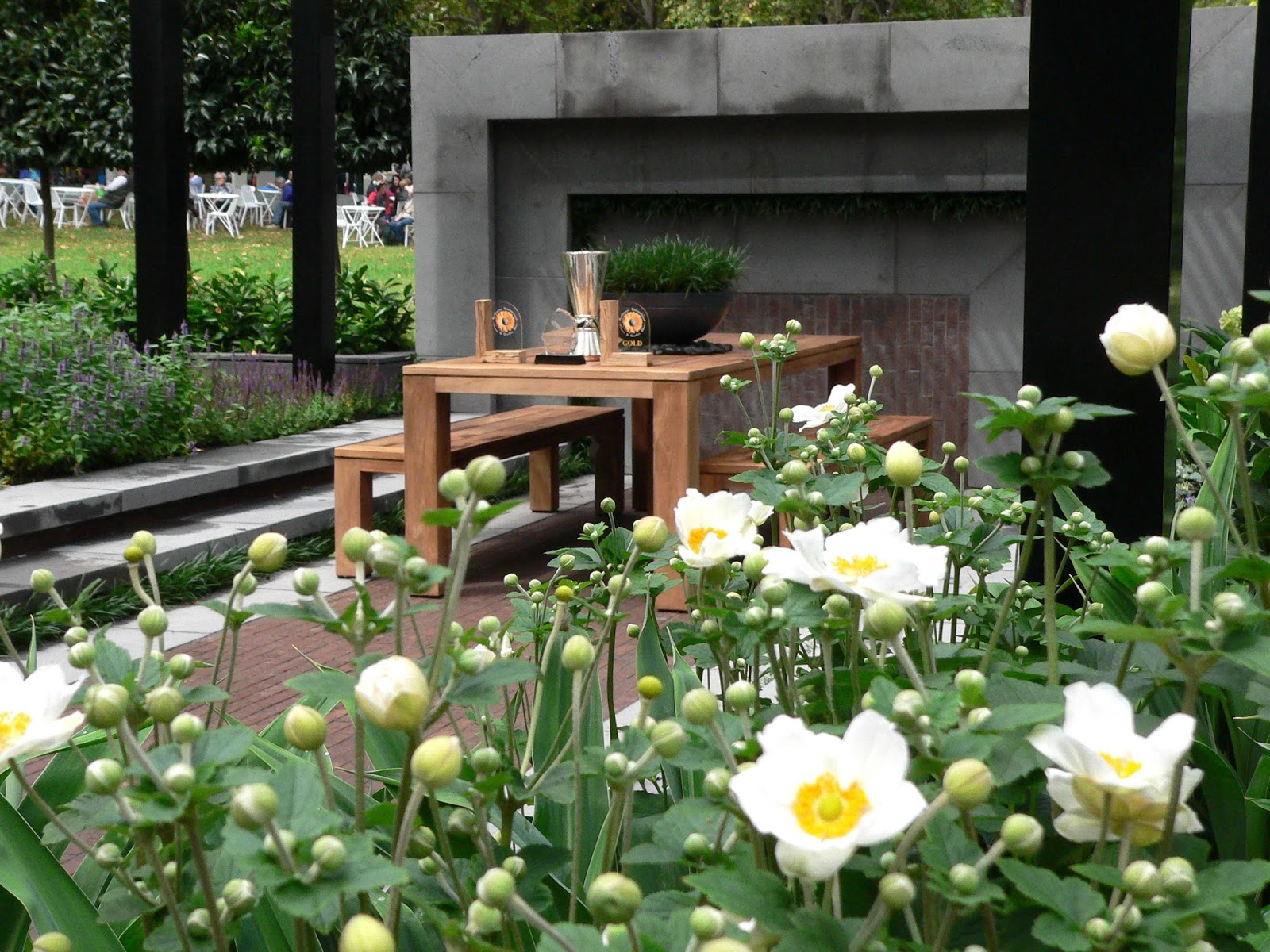
'The Retreat' by Paul Hervey-Brookes

Not all the plants used in this design were Australian natives but 'The Retreat' unmistakeably had an Australian aura. This design showcased what I would describe as a wilderness garden come colonial settlers cottage style of garden. It used several Eucalypts for the tall plants and had several beds which bordered a meandering path of granetic sand and river pebbles. Westringia, Anigozanthos, Limonium, Correa and Salvia (I think) were used in the beds. The colour of the sand and the river pebbles seemed to simulate a dry river bed you might find somewhere where the soil has a tinge of redness to it (like parts of the snowy mountains). This splendour was all complimented by a traditional rusty gate.


Garden art and sculpture

I have recently been doing some work for a company called 'Neo Rustic' which sells different Australian  and exotic hardwoods and makes benches, tables and furniture from timber. Maybe that is why I seemed to notice an increase in the amount of timber used in the garden sculpture at MIFGS. I really love the use of timber in garden sculpture as I think it has a much more organic appearance compared to straight stone or metal pieces. Lots of the timber seemed to be Tasmanian in origin (eg Huon Pine).


Sunday, March 20, 2016

Seedling emergence and irrigation installation

Burnley vegetable plot update

This post describes my plot at Uni as it was last week on the 9th of March (a week after planting out).

Being a part time student means that unlike the full timers I have to leave my plot to fend for itself for 5 days. During my absence the weather was warm with some days in around or over 30 degrees Celsius. I was initially worried that the seeds I had sown weren't going to sprout, but my worries diminished upon arrival where I was greeted by several small green cotyledons (seed leaves) piercing the fine mulch I spread the week before. The carrot seeds seemed to have a high germination rate and the snow peas all had at least one representative present at the base of each bamboo tripod leg. Under the mulch the ground seemed moist so I suspect my fellow student came through on their promise to water my plot which was great considering rainfall had been minimal. All the other seedlings seemed healthy and all were still present and intact unlike some other plots which had endured nibbling from either various herbivores (I'm assuming wood duck or snail). I did a little weeding and watering and then installed drip irrigation which consisted of 5 drip lines. I mulched over the drip line and called it a day.


Example plot showing our drip irrigation layout


A snow pea seedling stretching towards the sun


This is possibly the most boring photograph I have ever taken. If you look carefully you can see the tiny carrot tops in a row.


New Zealand yams doing their thing


Tuesday, March 15, 2016

Melbourne International Flower and Garden Show. Building Melbourne Uni's exhibit.

MIFGS Pre Release!

After years of blogging reviews of the Melbourne International Flower and Garden Show (well except for last year when I went but was too lazy to write a review) I finally got my first opportunity to be involved with one of the exhibits. To be truthful it was a voluntary position with my only 'payment' being some show tickets to get in once it is open.

The exhibit I was working on was the University of Melbourne's horticulture display which celebrated 125 years of continual horticultural training at the Burnley campus. The fact that the Burnley campus has been in operation for that long is quite an achievement and no other institution in the world has provided continuous horticultural training for that length of time.

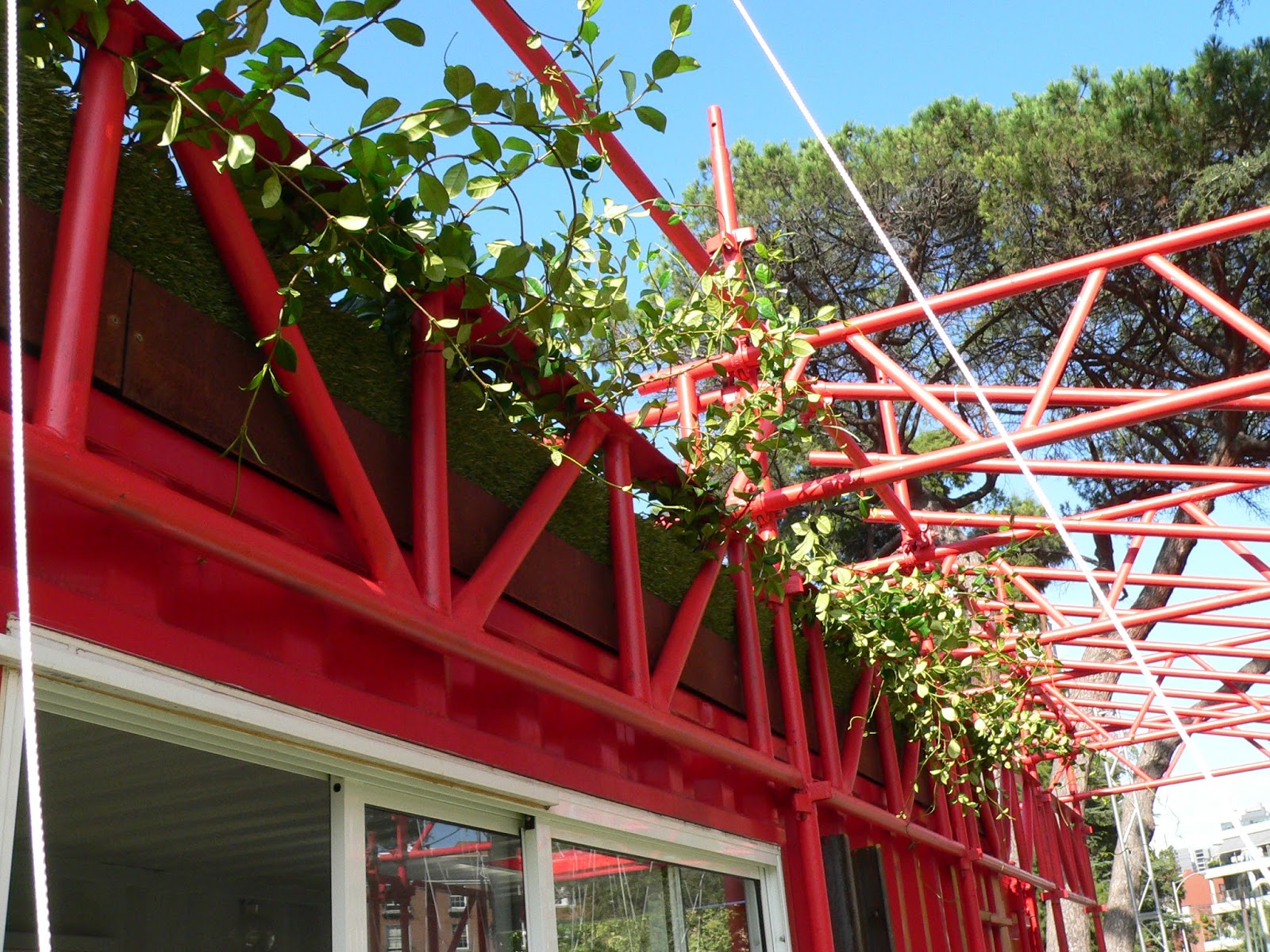
The display itself consisted of a shipping container we adapted with a green roof and green wall panels. The scaffolding outside the container was converted into a hanging garden with waxed paper cones used as plant containers. Each cone has a horticultural icon and a brief description of their achievements and influence on horticulture.

It was a fun but exhausting day and I left feeling chuffed that I had contributed something to the show which I have gone to and admired for years. By the end of it all I was so tired I only took a brief walk around to see the rest of the exhibits. I left at 3.30pm and some of the other sites looked like they still had lots to do considering the opening is tomorrow. I will visit the show proper this week and write up a review of some of the displays next week. Right now though I think it's time for a cup of tea and a spell on the couch :)


A view from the south side of the exhibition building.


On top of the container planting organising the green roof


A view from the top of the container at our next door neighbours exhibit


Another picture taken from the top of the container showing the back side of the garden exhibits getting ready to be judged


Nick organising a green wall panel


 Those damned cones took all day to hang up and fill with plants


Jasmine plants ready to get transferred to the roof


Jasmonified green roof


More cones (see if you can spot Megan Backhouse)


Teeny weeny plants in teeny weeny test tubes


Test tube plant


 Almost done for the day


 More cones


Some old fashioned plant biology lab gear in the container (and also a portable air conditioner which was heaven to stand in front of)


One of our green wall panels filled with succulents


 Why did I take so many pictures of cones?


Ah now for the important pictures. Ben on the left and me on the right.


All the crew from Burnley at the end of the day