Showing posts with label edible weed. Show all posts

Saturday, April 23, 2016

The incredible edibles and wonderful weeds of Jharsuguda India

Plant appreciation in the Indian village of Jharsuguda December 2015


In late 2015 I was gifted airline tickets to exotic India where I spent 4 weeks travelling with my family around the north central area of the country. The tickets were given to us by my father in law who migrated to Australia from India in the 1960s. For almost one week we stayed with his sister's family in the town of Jharsuguda in the district of Odisha.

Staying with the family was a great way of experiencing Indian life. The town is not really a tourist area so walking around there seemed a bit more authentic than other places I visited such as Agra. To a plant nerd like myself it was also a chance to wander around and see what plants grow in the area. As the name of the post suggests the main plants I noticed on my walks through the town were the weeds and edible plants that were both in abundant supply.

As I've mentioned on numerous occasions in my other posts the term 'weed' is not one I am comfortable applying to plants as weeds are really only 'plants out of place' or 'plants that grow where you don't want them'. Other factors which contribute to plants being labelled weeds are invasiveness and the ability to grow and thrive where other plants wouldn't (which in turn contributes to their invasive nature). The 'weed' plants I show beneath all contain some of the above mentioned characteristics but seeing them through the eyes of an outsider meant I could see beauty in them. It was novel to see the few that I did recognise thriving without care where in Australia they would usually be tended to as ornamental exotic plants.

The edible plants I saw in Jharsuguda were mostly ones I had never heard of before. There were lots of fruit trees growing in peoples yards and on street sides. Papaya plants seemed to grow particularly well in that area and almost every tree I saw had some fruit on show. The other fruit trees also had some fruit but unfortunately the mango trees has nothing but foliage on their branches as I was visiting in the middle of an Indian winter.

In a future post I will write about some magnificent local residential gardens I visited. Please note that all plant identification done on these pictures was done through speaking to the local residents and my memory of such conversations may not be entirely accurate.


I cannot call the above plant a weed as doing so would probably offend 1.2 billion people. It is a lotus flower which is the national flower of India. Here it was growing in the wild in a pond on the outskirts of town. Amazing to see such an iconic plant growing in the wild where in Australia it would be an ornamental exotic aquatic plant in a high end garden.


The plant above was described to me as the 'Besharam' plant in hindi (do not trust my spelling). It was everywhere and it was said that it could grow anywhere. I saw it growing in wetlands and also arid areas. After doing some googling I'm pretty sure the plant is Ipomoea carnea and its morning glory style flowers seem to confirm that. This plant was probably the most invasive species I noticed.


This was another plant that was a regular in arid vacant blocks where rubble was in plentiful supply. Not sure of its name but those flowers make for interesting viewing.


This any is crawling across the flower of another rubble loving plant. What an amazing flower structure. I think I remember somebody telling me this plant is poisonous. 


 The inflorescence above was described to me as a blackberry plant? I'm not sure it doesn't look anything like the flowers on the blackberry plants at home and I think I remember noticing a lack of thorns on the branches and the leaves looked different. Nevertheless people seemed to think you could eat its fruit (I think I would ask for a demonstration before trying it myself). Maybe I misunderstood what was being said to me.


A more entire view of the mysterious 'Jharsuguda Blackberry'


The leaves on this plant (some sort of Taro or Elephant Ear type of plant) were massive. It was growing near the edge of a pond. I'm not sure of its name.


What an amazing sight. A cashew tree spilling out of somebodies front yard.
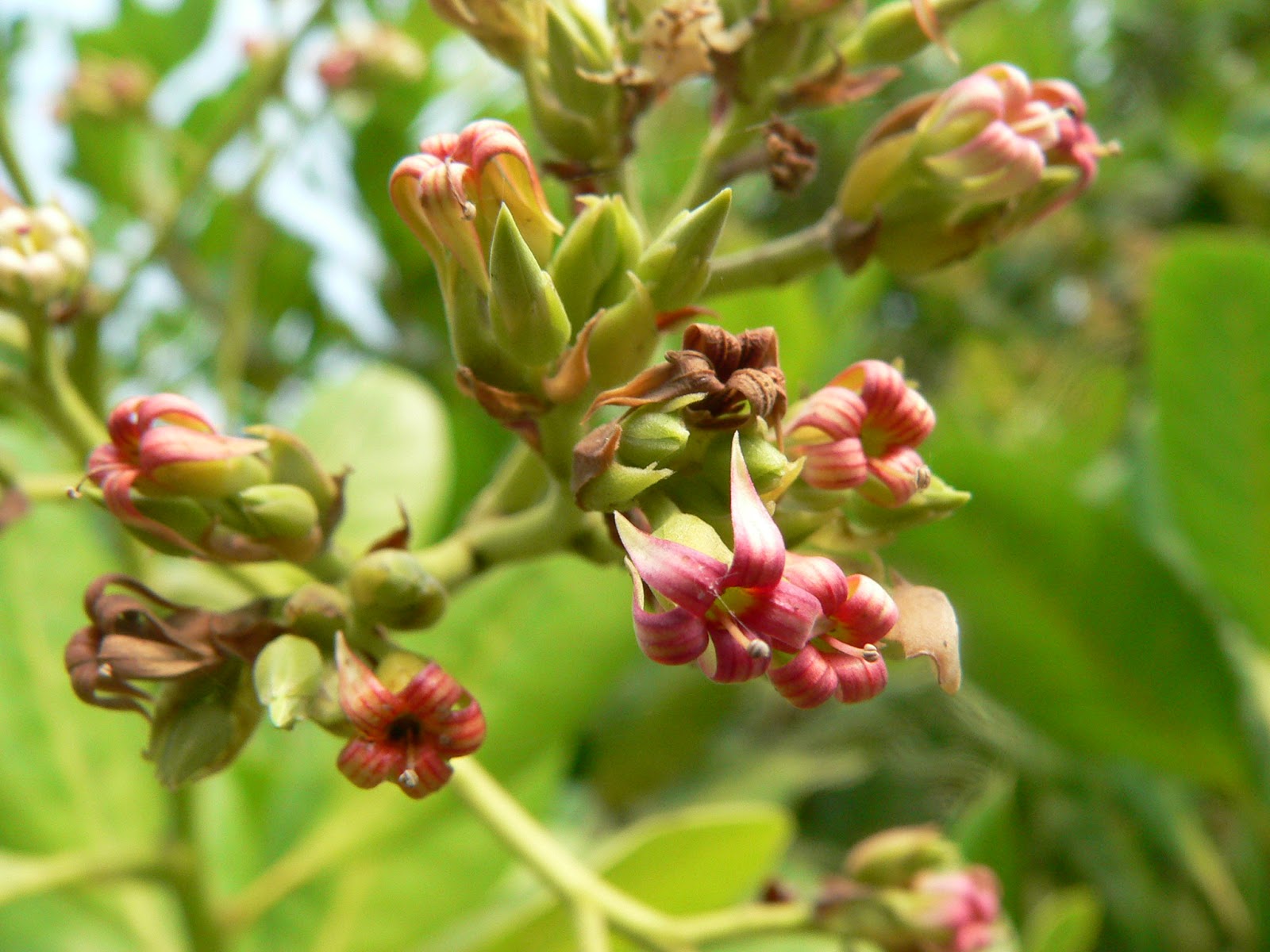


A close up of cashew flowers. Incredible to see this as cashews in Australia are a very expensive snack. 


The tree above is one I've never heard of or seen before. It was described as the Bale tree. I didn't get to try its fruit as it wasn't ripe.


I wish I could remember what this fruit was called but I cannot recall its description. It could have been described as a 'wood apple' or maybe it what was called a 'Chicu' fruit. I'm not sure.


The iconic Neem tree which has several uses. Lots of these trees were growing in town. Apparently you can brush your teeth with a Neem twig.


Last of all the papaya or paw paw tree complete with fruit. This is one of the few fruits that I had the pleasure of eating straight from the tree. The papaya fruit on these Indian trees was significantly tastier and sweeter than the fruit back home


Wednesday, November 27, 2013

Lots of Dandelions? Learn how to make Dandelion coffee.


I've made this several times now and the taste is really growing on me (yes the pun is intended). I would describe the taste as very earthy. Once brewed it looks identical to coffee. It has no caffeine which could be a good or bad thing depending on your point of view.


DANDELION COFFEE RECIPE

1.      Learn how to correctly identify a Dandelion. Although at first glance it may seem simple there are several other plants that look like a dandelion and you don’t want to be picking the wrong ones. Dandelion can be identified by its flower stalk and by its leaves, which are in a basal rosette. The flower stalks rise straight up out of the centre of the radial leaves with each stalk holding one flower head. Both stalks and leaves release latex, a milky sap when cut, and may cause dermatitis for people who are latex-sensitive. Flowers begin as roundish, green buds huddled in the eye of the leaf rosette and open into 5 cm flower heads made up of bright yellow flowers. The seed heads are well known to most people and especially children who blow them into to the air to make wishes (and thereby propagate the plant!). The bright green leaves deeply and irregularly toothed, and can grow to 25cm in length. Make sure that you only pick Dandelion from your own garden where you know that they haven’t been sprayed with herbicide. Remember that if you can't identify them then don't use them.

2.      Remove the Dandelion from the earth. This is best done when the soil is moist so you can get all the tap root out. Ideally you want to pick really large Dandelion so you get plenty of tap root as the tap root is what goes into the coffee. Remove the leaves and eat them if you wish.

3.      After gather lots of Dandelion tap roots wash them several times in clean water to get all the dirt off them. After you have washed them cut the small lateral roots from the main tap roots.

4.      Place the roots in between some paper and let them dry for a few days. Alternatively you could use a food dehydrator if you are lucky enough to possess one.

5.      Cut the Dandelion roots into small sections under 1cm in length and then place them into an oven at around 180 degrees Celsius with the door open for about 30 minutes. I then cut them into even smaller pieces and put them back in the oven with the door closed. Keep an eye on them throughout all this, the longer you roast them the sweeter the coffee will taste but you don’t want them to burn. I’m not exactly sure as to how long I roast them with the door closed, basically I just keep checking them and when they are nice and dry and brown I know they are done.


6.      Remove the roots and give them a good mortar and pestling. You should now have a nice and dry substance which looks like instant coffee. 

 7.      I like to brew the Dandelion coffee in a plunger adding 2 teaspoons per cup. Add milk and sugar if you wish. Enjoy.


The common sight of the seed head. Who would have though that as kids we were propagating them when we blew the seed head into the air to to make a wish.


Big 'bucket o lions'


The tap roots are where the action is at.


Chopped, washed and ready to oven.


Chopped again ready to put back in the oven with the door closed.


Ready to brew.


Friday, March 15, 2013

Dandelions a weed, medicinal herb and urban / rural edible


A COMMON AUSTRALIAN GARDEN RESIDENT

In Australia and probably many other parts of the world the common dandelion is easily recognized by its bright yellow flowers and fluffy seed head. Many lawns (unfortunately including my own) are full of dandelions and they seem to pop their heads up the next day after a mowing if the conditions are right. They can be an absolute pain to remove by hand as their tap root system can run very deep which anchors the plant into the ground. The whole tap root needs to be removed to kill the plant. If you want to clear a large lawn of dandelion a selective herbicide can be used which will kill the broadleaf weeds and hopefully not kill your grass. You have to be careful when doing this as buffalo grass is particularly sensitive to selective herbicide so if you have Buffalo grass you need a produce such as Yates buffalopro weed killer. There are several different species of dandelion (Taraxacum Sp) including Taraxacum californicum the endangered Californian dandelion. The word Dandelion is of French origin and means "lion's tooth". Dandelions are thought to have evolved over 30 million years ago in Eurasia.


A common sight in my lawn


DANDELIONS AS FOOD AND AS DRINK?

As hated as they are as a weed Dandelions can be used as a food source. The young leaves are edible although rather bland tasting. The young leaves can also be made into a tea. If you wash the roots and slowly roast them in the oven on a very low temperature they can then be ground up and brewed into a coffee like drink. I've tried both the Dandelion tea and Dandelion coffee. I found the tea a bit tasteless but the coffee actually wasn't too bad. The coffee like drink can be purchased some Australian shops. It is quite expensive, funny that what most consider a weed costs so much to buy as a product in the supermarket. 


The tough tap root system of a dandelion


DANDELIONS AS A MEDICINE

Dandelions have been used as a herbal medicine by humans for much of recorded history. Native Americans boiled dandelion in water and to treat skin problems, heartburn, kidney disease, swelling,  and upset stomach. In traditional Chinese medicine it has been used to treat appendicitis, stomach problems and breast problems, such as lack of milk flow or inflammation. Europeans have used it to remedy boils, eye problems, fever and diabetes.


They are tough little blighters. Look at this one growing in straight crushed rock at my home in Macedon.


WEED INFORMATION SUMMARY
COMMON NAME: DANDELION
BOTANICAL NAME: TARAXACUM SP
FAMILY: ASTERACEAE

DESCRIPTION
Dandelion is a very common broadleaf biennial weed plant in Australia. It will grow in most soil types. It is a prostrate plant with upright yellow flowers. It is a broadleaf plant with deep taproots. Dandelion is a warm season plant that dies back over winter.

METHOD OF SPREAD
It is mainly spread via airborne seed. Mature dandelion flowers are very light and easily transported by wind.

CONTROL
Hand weeding dandelion can be difficult even if the soil is moist and soft. The whole taproot needs to be removed or the plant can regenerate. Solarisation may an easier method to employ for controlling dandelion. Glyphosate will destroy this weed if a chemical control method is considered. Dandelion needs to be removed before the flowers mature and become transported by wind or other means. Repetitively scalping dandelion may work but it will take many scalps to totally destroy the plant.