The Geelong Botanic Gardens
Brief history of the gardens
The gardens were first established in 1856 and are the fourth oldest botanic gardens in Australia. The first curator of the gardens was the English born botanist and gardener Daniel Bunce who developed and expanded the gardens in terms of both its physical size and in the amount of established plants which it contained. In 1859 published a catalogue of 2,235 plants which he established in the gardens which is impressive considering he was only appointed curator in 1857. He was also responsible for many of the now mature trees, some of which are national trust trees.The second curator was John Raddenberry who was responsible for reducing the amount of Bunce's blue gums and replacing them with more traditional English trees. He was also build a huge fernery (18 metres high) which was neglected then demolished. Around this time the gardens shrunk in size but in 1959 they were expanded again and in the present day they are large in size but also packed with interesting plants.
Entrance plantings
Upon arriving at the gardens I was impressed by the entrance which was announced with the flower spikes of several Xanthorrhoea plants and the swollen trunks of Queensland bottle (boab) trees. Xanthorrhoea plants are really expensive (you are charged per cm of height) and these ones were huge. Once I had walked into the gardens themselves I encountered what is known as the 21st Century garden which had a large pond (or billabong), a landscaped sand area, natives and exotics, a cactus bed and to my delight a tree named Dracaena draco (dragon tree). I had seen a another similar tree online called Dracaena cinnabari on the internet and didn't realize we had this similar tree in Victoria.
Xanthorrhoea plants complete with flower spikes

The swollen bellys of these trees were a dead give-away that they were boab trees aka Queensland bottle trees.

The amazing branch structure of the dragon tree (botanical name Dracaena draco).

Ponytail palm trees in the 21st century garden.

The cactus bed with the classic barrel cactus in abundance.

Rose and tea gardens
The next part of the gardens was the rose garden which had all the different types of old roses on display. Unfortunately none were in flower that day because seeing them all in flower would have been a great way to see their differences and would have helped me in future identification of old roses. Following the rose area was a section called the tea garden which contained plants to make teas and herbal infusions such as fennel and calendula.
I'm guessing this may have been the original entrance but it is now surrounded by the 21st century garden. There are two 'bollard people' one of which you can see in the picture below. The other bollard represents Daniel Bunce.

One half of the rose garden which unfortunately was not in flower at the time.

Part of a bed of calendula in one of the tea garden beds.

Rock pillar of the forgotten garden
After the rose and tea beds there was a large fountain close to several large banana trees complete with fruit. This area also had a section called the forgotten garden which I'm pretty sure is where the old fernery used to be. A large rock pillar which was covered in sprawling creeping fig remains in place. This pillar used to be at the centre of the massive fernery.
Banana trees complete with fruit.

The large rock pillar which used to be the central piece of the now demolished fern house.

National trust trees and the temperate garden
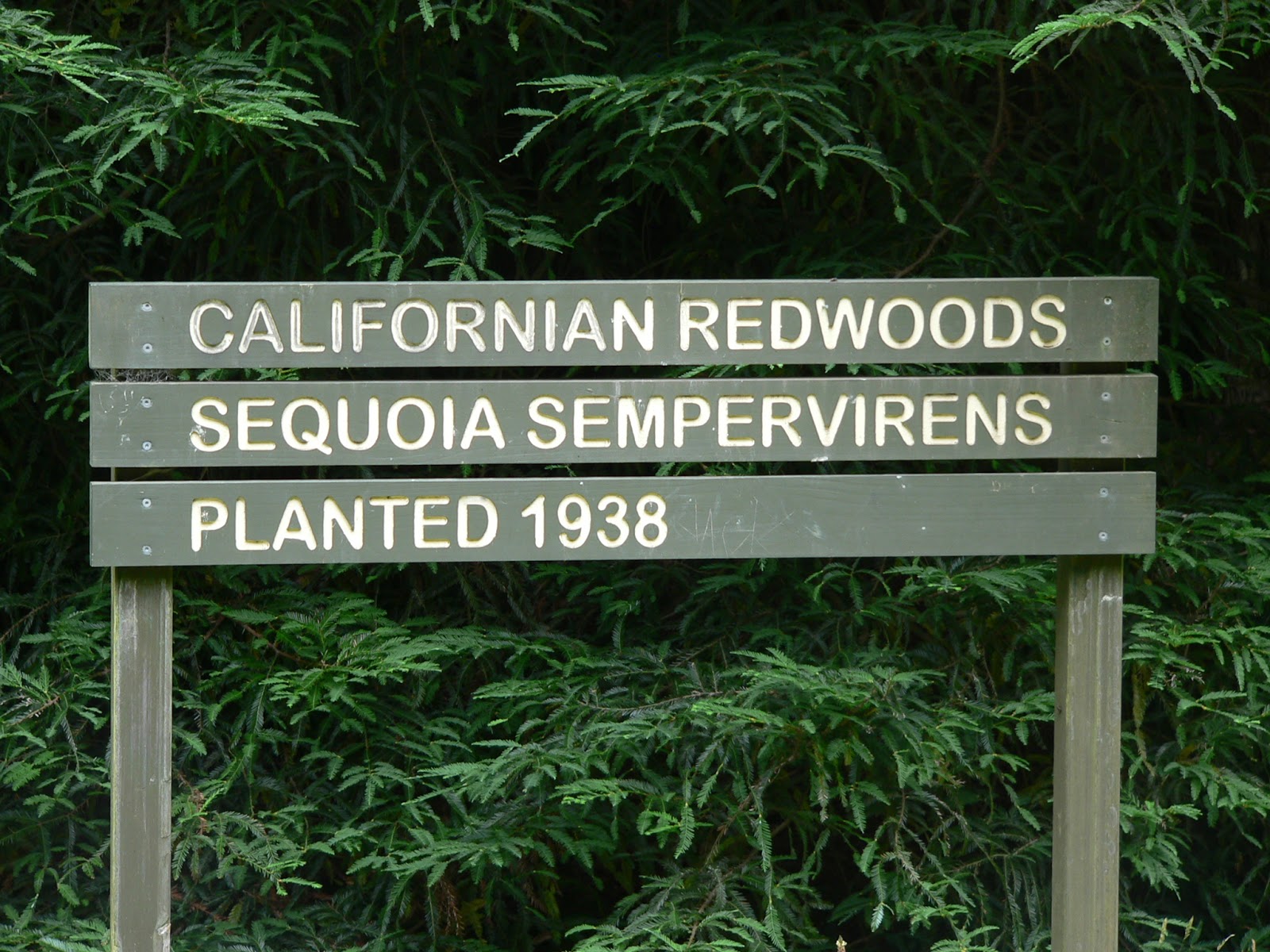
Beyond the forgotten garden I found several of the national trust trees such as huge Ginkgo biloba (maidenhair tree) and one of my personal favourites a Californian redwood tree. Near the Ginkgo was an extensive collection of pelargonium plants and a section called the temperate garden.
The national trust Ginkgo biloba tree. Ginkgo's are an ancient tree species that evolved before flowering plants.

Part of the temperate garden

A view from underneath the national trust Sequoia sempervirens (Californian redwood) tree. One of my personal favourites.

The next two pictures are of the Pelargonium collection.


Parallel beds with interesting plants
I ended the visit with a walk through several of the parallel garden beds. I'm not entirely sure but I think these may have been part of Bunce's original design. From there I walked back through the new fern area and as to end the visit I saw a bizarre looking tree that seemed to be directing all its growth to one side. I didn't have time to properly identify it but I think it may have been a monkey puzzle tree. If you are interested in plants and gardens please visit the Geelong botanic gardens if you are in the area. You will not regret it.
One of the parallel beds bordered by good old English box.

At first I thought the plant in the next two pictures was a Correa but it was called Justicia pauciflora.


Aucuba japonica or variegated Japanese laurel.

Justicia brandegeana common name shrimp bush. I guess I can see why it got that name.

A flower on a South African bottle brush bush.

A view of the fernery with soft tree ferns a plenty.

Maybe this tree was once shaded out on one side causing its growth to be directed to one side.