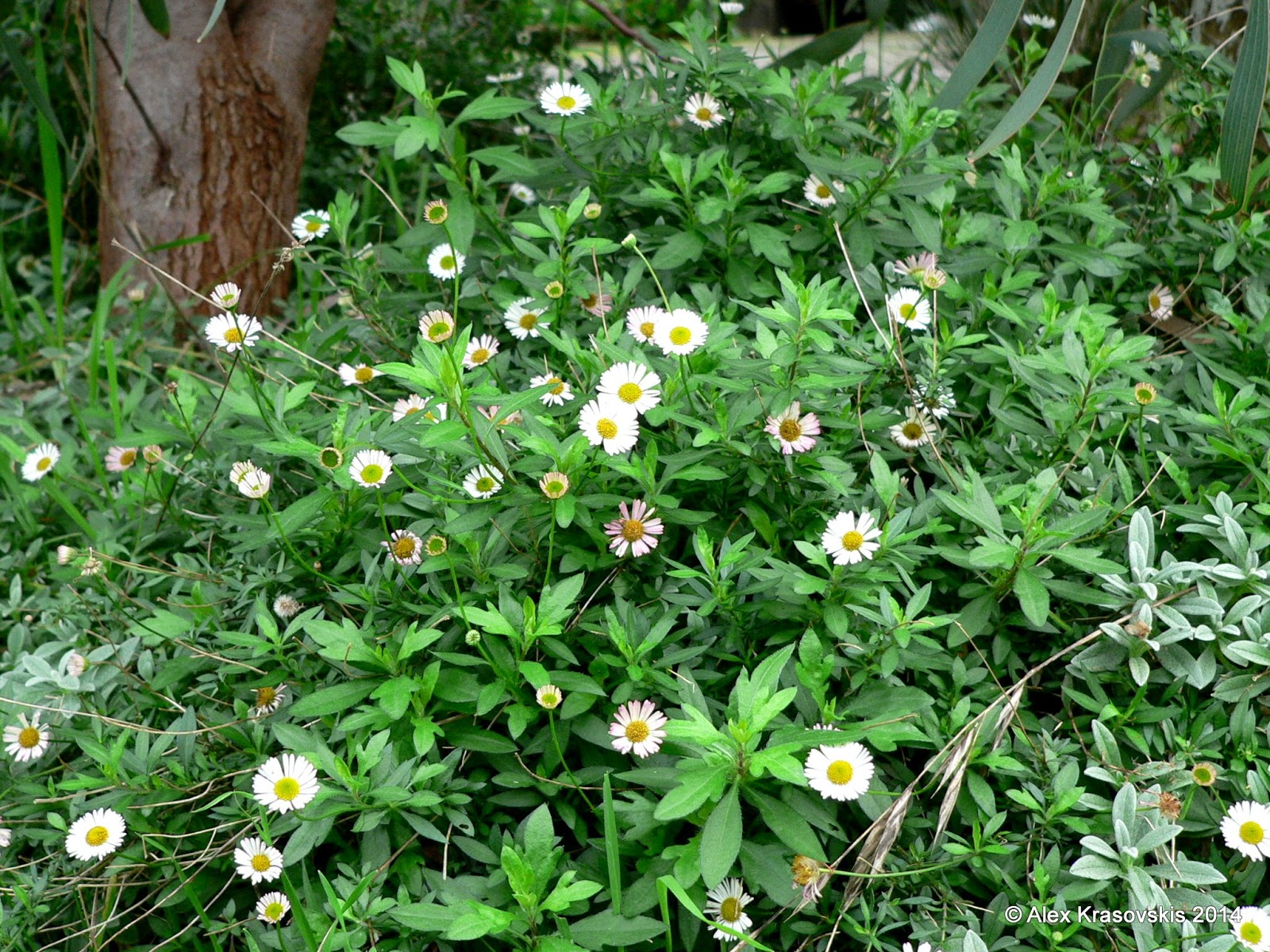
Erigeron Karvinskianus (Seaside Daisy)
I was recently doing a job overhauling a clients front yard and needed a ground cover plant to fill a space. The plant needed to be able to tolerate some shade, tough, a relatively low water user and a prolific spreader with the ability to out-compete any weeds that might pop up. A mass planting of Erigerons immediately came to mind.Erigerons have been a staple plant of many cottage gardens in Melbourne for as long as I can remember. They are a plant I had trouble formally identifying. When I asked people what they were called people just shrugged there shoulders and said things like 'I don't know... That daisy plant'. They are unassuming and common but don't let that deter you. Erigerons are a tough little blighter of a plant able to tolerate dryness, shade and general neglect. I have them in my own garden in Macedon where they have proven to be very frost hardy. I have never watered them and they still thrive. Another great thing about seaside daisy plants is how they seem to constantly have at least some their tiny white / pink flowers on show in the cooler months were they are at their low ebb.
Seaside daisy spacing for use as a ground cover
Information on the plant tags for Erigerons usually states a width of about 1 metre. When I planted out my clients garden with them I spaced them at 40cm to ensure a fast meshing of their foliage. I had improved the soil in which they reside so I wanted fast coverage on that area so weeds couldn't take hold. Seaside daisies will self seed and spread around a bit so you could probably get away with planting them a little further apart if need be.
The classic daisy flower of Erigeron Karvinskianus

Here they are having no trouble covering the soil under an established Hakea tree in my garden in Macedon. Keep in mind this picture was taken in winter and they are usually described as being a warm season flowering plant.